 Squishy Butter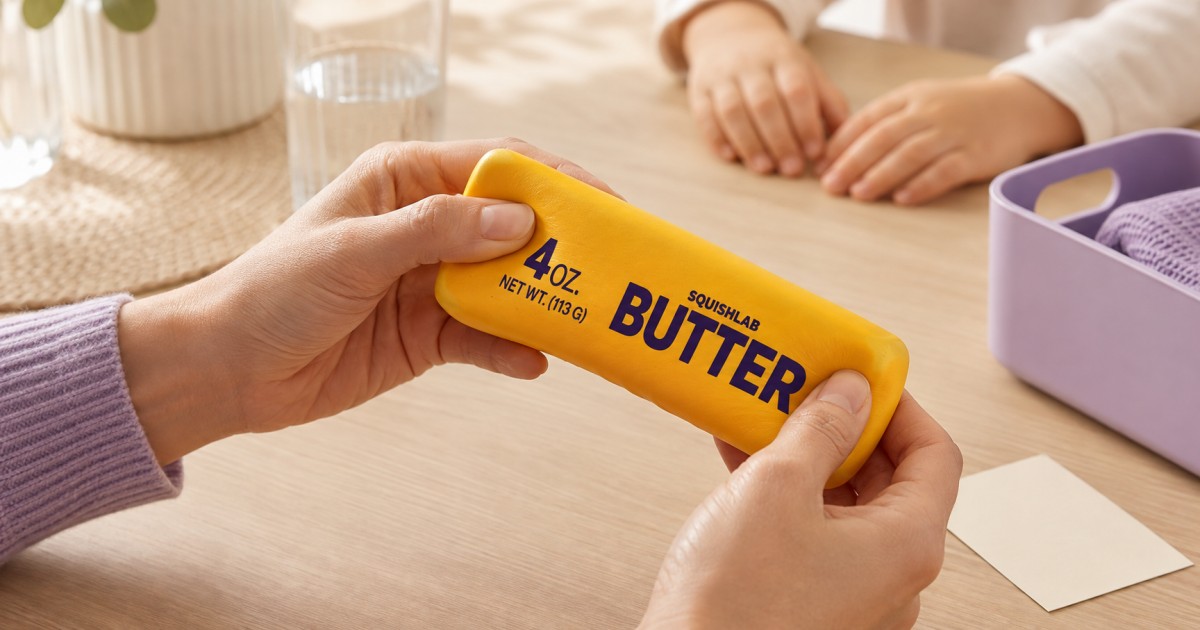
The honest answer is that it depends on the toy. Here is what EU scientists, a 2026 emissions study and the U.S. Consumer Product Safety Commission have found, and a checklist to tell a safe squishy from one to bin.
Short answer: squishy toys are not automatically unsafe, and they are not automatically safe either. Regulators and researchers have found real problems in some products: chemical emissions from certain foams, counterfeit toys with excessive lead or prohibited phthalates, fillings such as water beads that are dangerous if swallowed, and burns from heated squishies. A tested toy from an identifiable maker, with an age grade and an intact skin, is a different product from an anonymous one that smells of solvent and leaks. This guide explains how to tell them apart, with every claim linked to its source.
Are squishy toys safe?
There is no honest blanket answer, because "squishy toy" covers very different objects: solid slow rising polyurethane foam, stretchy skins filled with gel or liquid, and toys filled with water beads. Each carries its own risks, and quality varies from tested branded products to anonymous counterfeits.
The clearest recent statement comes from the U.S. Consumer Product Safety Commission, which in August 2026 warned about fake and counterfeit squishy toys that can contain excessive lead, prohibited phthalates or other hazardous chemicals, fillings that cause intestinal blockages or choking if released, and packaging with no warnings, age grading or manufacturer identification. The agency said it had identified 55 shipments of violating squishy toys at U.S. ports and, with Customs and Border Protection, stopped 355,683 units from entering the country. [1]
That is a warning about specific bad products, not about the category. A squishy sold by a real company, with age guidance on the pack, is expected to meet toy safety rules in the market where it is sold. The rest of this page is about how to tell which kind you are holding.
Are squishies toxic? What the science says
Two sources matter here. In 2021 the European Commission's Scientific Committee on Health, Environmental and Emerging Risks (SCHEER) reviewed test reports from the Danish Environmental Protection Agency and the Swedish Chemicals Agency and assessed eight organic chemicals emitted by squishy toys, including N,N-dimethylformamide (DMF), N,N-dimethylaminoethanol (DMAE), triethylenediamine (TEDA), bis(2-(dimethylamino)ethyl) ether (DMAEE), cyclohexanone, xylenes and dichloromethane. The committee derived toxicological reference values and emission limits for these substances, and it made a point that matters for parents: looking only at what a child breathes in is not enough, because children "might bite or suck on the toys", so chemicals released into saliva and swallowed pieces have to be considered too. [6] [7]
In 2026 a peer-reviewed study measured volatile organic compound emissions from nine commercial tactile toys. Emissions varied more than thirtyfold between products, from 24.8 to 775 micrograms per cubic metre per gram of toy. The researchers found an initial burst of emissions right after unpacking, and detected residues of the solvents dimethylformamide and methylene chloride at levels that, in a screening comparison, exceeded U.S. EPA reference concentrations. They called for standardised, product-specific emission testing. [8]
What this means in practice: some squishies release chemicals that regulators take seriously, the amount depends on the product, and a chemical being detected is not the same as a toy being dangerous. Concentration, how long a child plays with it, and whether the child mouths it all change the risk. That is exactly why the EU set limits per substance instead of banning the toy.
Why do squishies smell like chemicals?
The smell is the emission described above: solvents and additives left in the foam from manufacturing, strongest when the toy is new and fading over days. [8] A faint new-toy smell that disappears is common and not, by itself, proof of anything. A strong, lasting chemical odour on a toy with no manufacturer name is a warning sign to act on, because it is one of the marks of the counterfeit products regulators have intercepted. [1]
Two habits reduce exposure for any squishy: let a new toy air out of its packaging in a ventilated room for a day or two before it goes into a child's hands, and keep squishies out of the bed, where a child breathes next to them for hours.
Are squishies safe for toddlers and babies?
This is where the rules get strict. Babies and toddlers put toys in their mouths, which is the exposure route SCHEER said cannot be excluded. [6] The CPSC's general toy guidance is to follow the age guidance and safety information on the packaging and to keep small balls and toys with small parts away from children younger than three. [5] A squishy that can tear releases pieces of foam, and a filled squishy releases its filling; both are the wrong toy for a child who chews.
Practical rule: for children under three, only an age-graded toy from a named manufacturer, solid foam rather than filled, checked for tears before every play, and never a squishy with water beads inside.
Are water bead squishies dangerous?
Yes, and this is the most serious hazard on this page. Water beads can grow to around 100 times their original size when they absorb liquid. Swallowed beads can cause choking, vomiting, dehydration, intestinal blockages and life-threatening injuries that need surgery; beads pushed into an ear can damage hearing. The CPSC counted nearly 7,000 water bead ingestion injuries treated in U.S. emergency departments between 2018 and 2022 and is aware of at least one infant death, a 10-month-old girl, in 2023. [3]
On 3 September 2026 the CPSC told consumers to stop using and dispose of a specific product, Ivyapingdianpu's Squishy Bun toys: dumpling-shaped squishy balls with glitter and water beads inside, sold on Amazon in June 2026, which violate the mandatory water bead standard and pose what the agency called "deadly ingestion, choking, and obstruction hazards". The seller had not agreed to a recall. [2]
Since March 2026 the United States has a federal safety standard for water beads: products made after 12 March 2026 must stay under a maximum expanded size, meet limits on acrylamide, and carry strongly worded warning labels. [4] Older stock and imports that ignore the rule are still out there, which is why the September warning exists. If a squishy for a young child contains water beads, our advice is simple: do not buy it, and if you own one, throw it away.
Can you microwave a squishy toy?
No. The CPSC has repeatedly warned about a social media trend of microwaving squishy toys, which can cause serious burns, and says squishies can also become dangerously hot when left in direct sunlight, inside a hot vehicle, near a heater or in any other high-temperature environment. [1] Heat also destroys the foam, so there is nothing to gain. We wrote a separate post on why you should never microwave a squishy.
Choking and ingestion hazards
A squishy does not need to contain water beads to be a choking risk. Foam that tears sheds pieces, and counterfeit toys "may break or tear during foreseeable use, releasing small parts or hazardous filling material". [1] The SCHEER opinion notes the same two problems with swallowed pieces: suffocation if the piece is large enough, and chemicals released in the gut. [6] Check the skin of a squishy before play, retire it at the first tear, and keep squishies away from pets, who treat a butter-shaped toy as food.
How to tell if a squishy toy is unsafe
The CPSC tells consumers to stop using a squishy toy that is torn, punctured, leaking, sticky, unusually soft, discoloured or beginning to deteriorate. [1] Add the warning signs from the counterfeit alert and you get a checklist you can run in a shop or on a listing page:
- No manufacturer. The pack or listing does not name a company you can look up.
- No age grade or warnings. Legitimate children's toys carry both.
- A strong chemical smell that does not fade after airing.
- Oily or sticky surface on a new toy, or a skin that tears when pinched.
- Filling you cannot identify, especially water beads, gel, liquid, powder or sand, in a toy for a young child.
- An active warning or recall for that product from the CPSC or your national authority.
Are counterfeit squishy toys dangerous?
They can be, and this is now documented rather than rumoured. The August 2026 CPSC alert lists what its inspectors found in fakes: excessive lead, prohibited phthalates or other hazardous chemicals; water beads or other gels, liquids, powders or sand that pose intestinal blockage, choking or aspiration hazards if released; toys that break or tear and release small parts; and missing warnings, age grading, tracking information and manufacturer identification. [1] Counterfeits copy the look of a popular toy, so a familiar shape is not a sign of safety. Buy from the brand or a retailer that names the brand.
How to choose a safer squishy toy
- Pick a named manufacturer and a listing that says what the toy is made of. Solid polyurethane foam is the simplest, most predictable construction.
- Match the age grade to the child, and keep small or tearable squishies away from children under three. [5]
- Skip fillings for young children. No water beads, gel or liquid for anyone who still mouths toys. [3]
- Air it out. Unpack a new squishy in a ventilated room and give it a day before play; emissions are highest at unpacking. [8]
- Keep it cool. Never microwave it, and do not leave it in a car, a window or near a heater. [1]
- Inspect it regularly and throw it away at the first tear, leak or sticky patch. Our cleaning guide covers safe cleaning and storage.
About the toys in our own buying guides: we link to slow rising foam butter and cheese squishies and to foam stress cubes, and we do not recommend water bead toys. Even so, a listing is not a lab report. Check the manufacturer, the age grade and the materials on the product page before buying anything for a child, and treat a strong smell or a tear as a reason to stop using it.
When should you throw away a squishy toy?
When it tears, crumbles, leaks, turns sticky or discoloured, smells sour or strongly chemical after cleaning, or when a regulator issues a warning for it. A worn squishy is a choking and chemical exposure risk. Bag it and bin it; do not hand it down or donate it. [1] [2]
FAQ about squishy toy safety
Are squishy toys safe?
Some are and some are not. A squishy from an identifiable manufacturer, with an age grade, intact foam and no strong chemical smell has passed the checks that matter. Counterfeit squishies, squishies with water beads or liquid fillings, and squishies that are torn, sticky or leaking are the ones regulators warn about.
Are squishies toxic?
Not as a category. EU scientists found that some squishy toys emit organic chemicals at levels that raised concern, and a 2026 study found solvent residues in some tactile toys, but the levels differ a lot between products. Whether a specific toy is a problem depends on that product, which is why regulators set emission limits and testing rules rather than banning squishies.
Why do squishies smell like chemicals?
The smell usually comes from solvents and additives left over from making the polyurethane foam. Chemical measurements show the highest emissions right after unpacking. A faint new-toy smell that fades in days is common; a strong, lasting chemical odour is a warning sign, especially on a toy with no manufacturer name.
Are squishy toys safe for babies and toddlers?
Be careful. Babies and toddlers bite and suck toys, and EU scientists say that oral exposure to squishy chemicals cannot be ruled out for that reason. Follow the age grade on the packaging, keep any toy with small parts away from children under three, and never give a young child a squishy that contains water beads, gel or liquid.
Are water bead squishies dangerous?
Yes, this is the most serious squishy hazard. Water beads can swell to many times their size inside the body, and the U.S. CPSC counts thousands of emergency visits and at least one infant death from swallowed beads. In September 2026 the CPSC told consumers to throw away a specific squishy bun toy filled with water beads.
Can you microwave a squishy toy?
No. The CPSC has warned that microwaving squishy toys can cause serious burns, and that squishies also become dangerously hot in direct sun, a hot car or near a heater. Do not heat an ordinary squishy toy in any way.
What is inside a squishy toy?
Most classic slow rising squishies are solid polyurethane foam with a painted or printed skin. Others have a stretchy outer skin filled with gel, liquid, powder, sand or water beads. Filled squishies are the ones to be careful with, because the filling comes out when the skin tears.
Are cheap squishy toys from online marketplaces safe?
Sometimes, but the risk is higher. In 2026 the CPSC stopped 355,683 counterfeit squishy toys at U.S. ports and warned that fakes may contain excessive lead, prohibited phthalates or hazardous fillings and often lack age grading and manufacturer identification. Check the listing for a real brand, an age grade and a description of what the toy is made of.
How can you tell if a squishy toy is unsafe?
Stop using a squishy that is torn, punctured, leaking, sticky, unusually soft, discoloured or starting to crumble. Be suspicious of a strong chemical smell, a missing manufacturer name, no age grade, or a filling of water beads or liquid meant for a young child.
What should I do if a child swallows part of a squishy?
Treat it as an emergency if the child is choking or has trouble breathing. If a water bead or filling may have been swallowed, call your local poison control centre or emergency number even if the child seems fine, because swelling beads can block the gut hours later. In the U.S. the Poison Help Line is 800-222-1222.
When should you throw away a squishy toy?
When the foam tears or crumbles, when the skin leaks, when it turns sticky or discoloured, when it smells sour or strongly chemical after cleaning, or when a regulator issues a warning for that product. A broken squishy is a choking and chemical risk, not a toy.
Is the butter squishy game safe for kids?
The game has no filling, no foam and no smell, so none of the hazards on this page apply to it. It shows ads and is rated for ages 13 and up on Google Play. For real toys, use the checklist on this page.
This article is general safety information, not medical or legal advice. If a child has swallowed part of a toy, contact your emergency number or poison control centre. Rules differ by country; the sources below are U.S. and EU regulators and a peer-reviewed study, checked on September 4, 2026.
References
Every claim above comes from one of these sources. The URLs are shown in full so you can check them.
- U.S. Consumer Product Safety Commission. Consumer Safety Alert: CPSC Warns Consumers About Fake and Counterfeit Squishy Toys; Reiterates Warning About Serious Burn Hazards. 5 August 2026.
https://www.cpsc.gov/Newsroom/News-Releases/2026/Consumer-Safety-Alert-CPSC-Warns-Consumers-About-Fake-and-Counterfeit-Squishy-Toys-Reiterates-Warning-About-Serious-Burn-Hazards - U.S. CPSC. CPSC Warns Consumers to Stop Using Ivyapingdianpu's Squishy Bun Toys Immediately Due to Risk of Serious Injury or Death from Water Bead Ingestion; Violate Mandatory Standard for Water Beads. 3 September 2026.
https://www.cpsc.gov/Warnings/2026/CPSC-Warns-Consumers-to-Stop-Using-Ivyapingdianpus-Squishy-Bun-Toys-Immediately-Due-to-Risk-of-Serious-Injury-or-Death-from-Water-Bead-Ingestion-Violate-Mandatory-Standard-for-Water-Beads%E2%80%AF - U.S. CPSC. Water Beads Information Center.
https://www.cpsc.gov/Safety-Education/Safety-Education-Centers/Water-Beads-Information-Center - U.S. CPSC. CPSC's New Federal Water Beads Safety Standard Takes Effect to Protect Children from Deadly Hazard. 12 March 2026.
https://www.cpsc.gov/Newsroom/News-Releases/2026/CPSC%E2%80%99s-New-Federal-Water-Beads-Safety-Standard-Takes-Effect-to-Protect-Children-from-Deadly-Hazard - U.S. CPSC. Toy Safety Education Center.
https://www.cpsc.gov/Safety-Education/Safety-Education-Centers/Toys - SCHEER (Scientific Committee on Health, Environmental and Emerging Risks). Final opinion on toxicological reference values for certain organic chemicals emitted from squishy toys with regard to adopting limit values under the Toy Safety Directive 2009/48/EC. European Commission, adopted 3 June 2021.
https://health.ec.europa.eu/document/download/7370b296-3e25-4ad1-878f-8879efefcb8c_en?filename=scheer_o_019_0.pdf - European Commission, Public Health. Publication page for the SCHEER opinion on chemicals emitted from squishy toys.
https://health.ec.europa.eu/publications/toxicological-reference-values-certain-organic-chemicals-emitted-squishy-toys-regard-adopting-limit_en - Jo M, Kim YH. Quantitative evaluation of hazardous VOC emissions from tactile toys and investigation of emission drivers. Ecotoxicology and Environmental Safety, 2026. PubMed 41806665.
https://pubmed.ncbi.nlm.nih.gov/41806665/